
A Cree Bride's Dreamy Bouquet.
Dried Flowers for an Indigenous Elopement
A remote wedding on Tsleil-Waututh territory.
It Started With a Really Good Email
Some inquiries come in and you just know. This one was from a groom who was clearly not messing around. He and his partner were eloping to a remote location in British Columbia. She's Cree, from the Tsleil-Waututh Nation. The spot they chose was stunning and completely inaccessible to a flower cooler.
Fresh flowers were out. The location was too remote, the journey too long, the wilderness too wild. But he wasn't about to let her walk into that moment without something beautiful in her hands. So he did what any good partner does: he figured it out.
He found me. He asked if I could help.
I could.
Why Dried Flowers Actually Make More Sense Than Fresh Ones (Hear Us Out)
Look, fresh flowers are lovely. But dried flowers? For an outdoor elopement, for a remote ceremony, for a bride who wants something she can actually keep? They make more sense than people give them credit for.
They last. Not just for the wedding, but forever. A dried bouquet doesn't end up composted after the weekend. It sits on your shelf and stays beautiful for years. For many Indigenous families, objects that carry memory and meaning across time matter. This bouquet will still exist in ten years. A preserved flowers outdoor wedding means your bouquet outlasts the cake, the dress bag in storage, and probably a few houseplants.
They go anywhere. Mountain lakes. Boreal forests. Cliffside ceremonies. Dried flowers don't need refrigeration, don't need water, don't need a cooler van following you down a logging road. They ship, they travel, they show up ready. If you need a dried wedding bouquet shipped across Canada, that's exactly what I do.
They feel like the land. Dried grasses, seed pods, sage, wild botanicals — these aren't hothouse flowers grown in a warehouse in Colombia. A boho dried flower bouquet feels like something you could have gathered yourself, walking through a meadow or along a river. For brides with a deep connection to the natural world and to traditional plant knowledge, that matters more than you might think.
They're low impact. No refrigeration, no chemical treatments at point of use, no flying roses across three continents. A rustic outdoor wedding bouquet made from dried botanicals sits better with those values. If you care about the land, and a lot of Indigenous couples do in a real and rooted way, dried florals are the natural choice.
The Bouquet: Every Stem Chosen With Intention
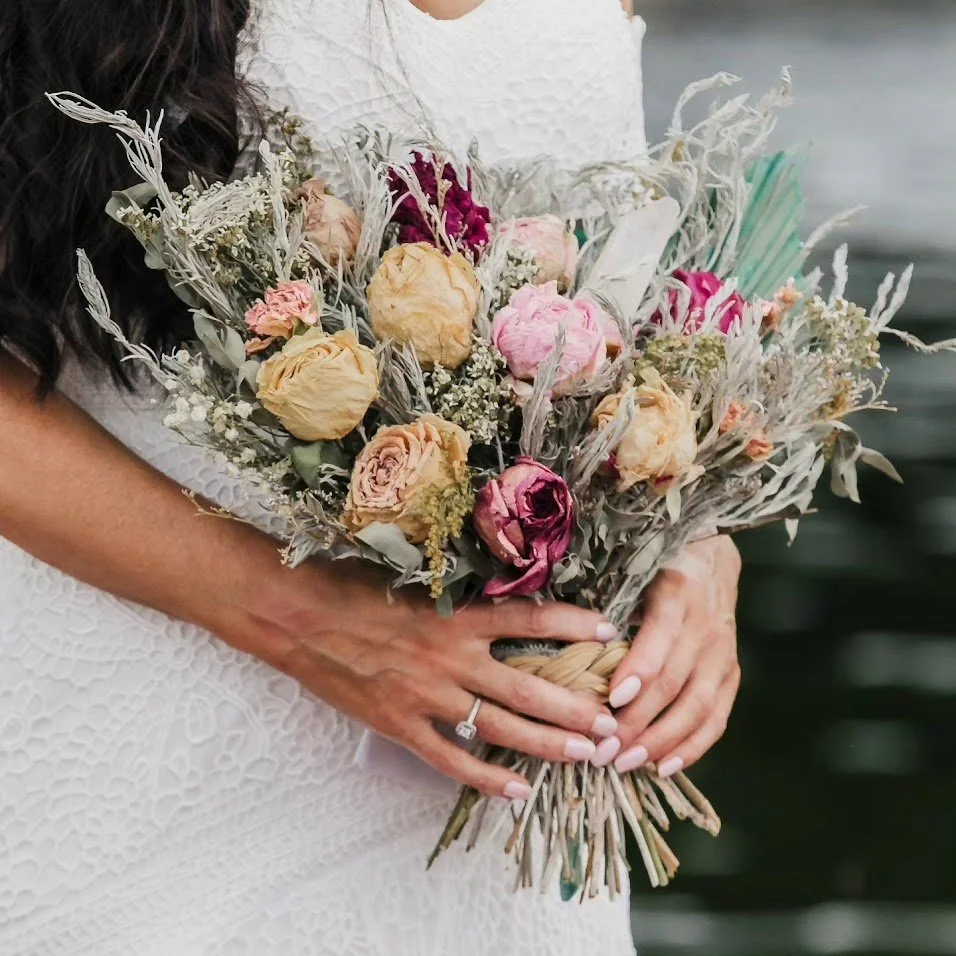
Bouquet by Bloom Boom
I built this one loose and wild. Nothing stiff, nothing over-arranged. But more than just beautiful, every element was chosen with meaning. That's how I work, especially when the bride carries a heritage that understands plants as more than decoration.
Dried garden roses in blush, champagne, and deep burgundy. Roses have carried meaning across Indigenous traditions long before they became a wedding cliché. The wild prairie rose holds deep significance for Cree people specifically and is one of the most recognized sacred plants on the Plains. Bringing roses into this bouquet wasn't just romantic. It was a nod to that lineage. Love, beauty, and the heart.
Dried peonies in soft pink. Peonies speak to healing, good fortune, and a life that is full. Their soft layered petals feel genuinely generous in the hand, which is exactly the energy you want on the first day of a marriage. They also add that lush, unhurried fullness that makes a bouquet feel like it belongs in a painting.
Dried magenta roses. Deeper, richer, bolder. These brought a jewel-toned depth to the arrangement and speak to passion and courage. The courage it takes to love someone completely.
Silver artemisia. This silvery, feathery plant is in the same family as prairie sage and carries similar energy: clarity, protection, and connection to the spirit world in many Indigenous traditions. It gave the whole arrangement its wild, ethereal quality. Like something that drifted in off the land.
Dried amaranth and mini spray flowers in soft coral and peach. Amaranth has been revered across many cultures as a symbol of immortality and remembrance. It does not wilt. It does not fade easily. For a wedding bouquet that is meant to last forever, that feels intentional rather than accidental.
A teal dried palm leaf. An unexpected pop of colour and movement. Sometimes a bouquet needs one thing that surprises you, something that catches the light differently and reminds you this is a celebration.
Sweetgrass wrapped on the stems. This is the part that quietly means the most. Sweetgrass is one of the four sacred medicines recognized across many First Nations traditions on Turtle Island. Braided sweetgrass represents kindness and is used to invite good spirits and positive energy. Wrapping it around the stems means she was literally carrying a blessing in her hands all day. Whether anyone else in the photographs knows that or not, she did.
It looked like something the forest put together on a good day. Which was exactly the point.
The boutonniere matched without being too matchy: dried roses and silver artemisia in the breast pocket of his navy suit, next to a gold tie. Understated, intentional, perfect.
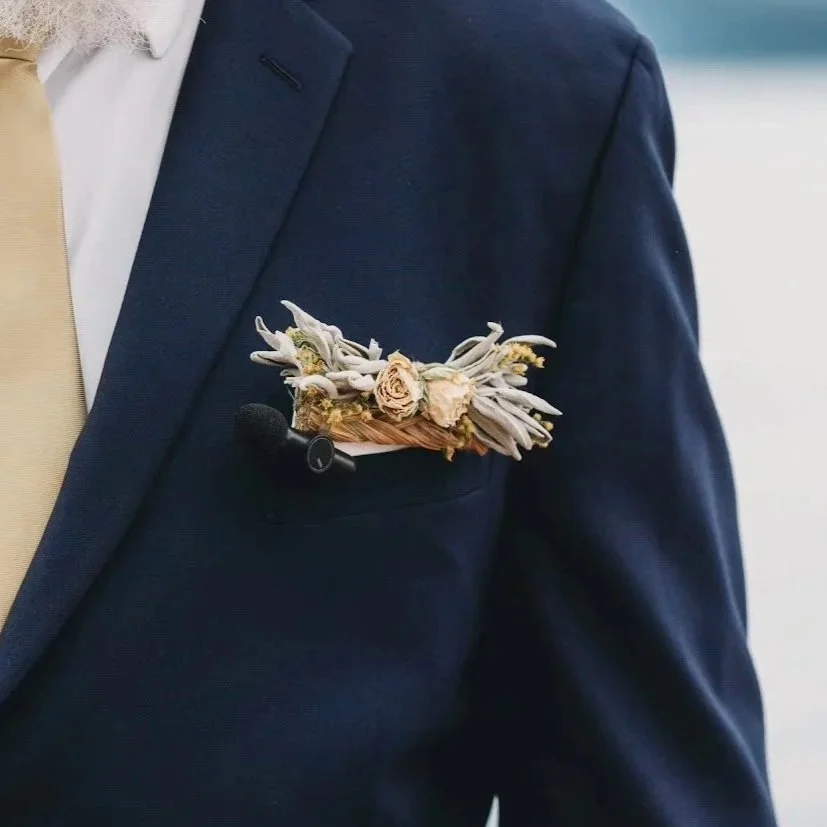
Simple, yet meaningful Sweetgrass Boutonniere for the groom.
The Setting
The Tsleil-Waututh Nation, whose name translates to "People of the Inlet," have been the stewards of the land around Burrard Inlet in BC since time immemorial. Their relationship with the water, the forest, and the mountains of the Pacific Coast isn't just historical. It's alive.
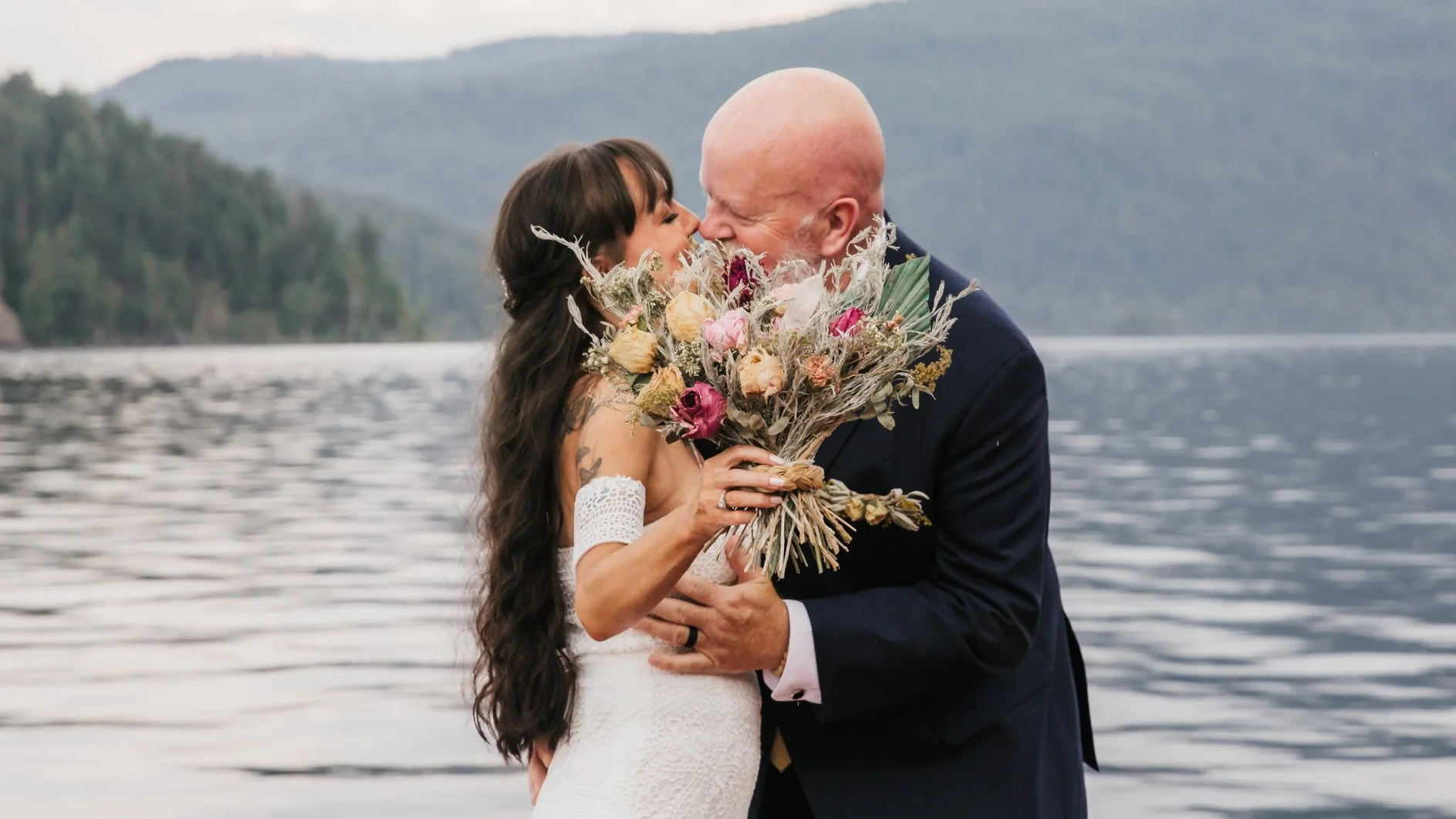
This couple chose to elope deep in that landscape: a still mountain lake, dense evergreen forest, dramatic peaks, low clouds. The kind of place that makes you want to be quiet for a minute and just take it in.
The bouquet was made to belong there. No hothouse flowers. No greenhouse roses that took a plane to get here. Just botanicals that looked like they were already home.
A Little About Who's Behind These Bouquets
I'm an Indigenous florist based in Saskatchewan, & Alberta. Cree and Italian, which is honestly a pretty fierce combo. On one side, there's a deep love of abundance, colour, and the kind of table that creaks under the weight of food and beauty. On the other, a relationship with the land, with plants, and with the idea that certain botanicals carry more than just a scent.
I grew up knowing what prairie sage smells like when you crush it between your fingers. I know what sweetgrass means and where it comes from. That's not something I learned from a floral textbook. It's something I carry.
As a Cree florist, when I work with Indigenous brides, I'm not approaching it from the outside looking in. I get it. And when it makes sense for the couple, I love weaving dried prairie sage and sweetgrass into arrangements. Not as a trend or an aesthetic choice, but because they belong there. Prairie sage has been used in ceremony and healing across Plains Cree and many other First Nations traditions for a very long time. Sweetgrass, often called the hair of Mother Earth, is one of the most sacred plants in Indigenous culture across Turtle Island.
Including them in a bouquet isn't decoration. It's intention.
If you're looking for an Indigenous owned floral business that actually understands what these plants mean to us, Hi, I’m Amanda!
Indigenous Weddings Deserve Florals That Actually Reflect That
More Indigenous couples across Canada are planning weddings and ceremonies that honour who they are, where they come from, and what matters to their communities. That looks different for everyone. Smudging ceremonies. Traditional regalia. Drumming. Land acknowledgements. Feast traditions. No two Indigenous weddings are the same because no two Nations are the same.
Florals can be part of that intentionality too. When I work with Indigenous brides, I love pulling in botanicals that carry real meaning rather than just filling space. Here are some of the plants I reach for most and why:
Yarrow has been used as a healing and protective herb across Indigenous cultures for centuries. It is associated with courage and the ability to withstand hardship. For a woman walking into a lifelong commitment, yarrow feels like exactly the right thing to carry. It is also one of the most beautiful dried botanicals, all feathery clusters and soft golden tones.
Dried cedar is a protector. Across many Nations, cedar is used to bring strength, purify spaces, and offer shelter from harm. It is one of the four sacred medicines in some traditions. On a wedding day, when two people are stepping into something new and a little bit vulnerable, having cedar close feels like the right call.
Lavender carries calm, devotion, and clarity. In plant traditions across many cultures including Indigenous ones, lavender and its relatives are used for grounding and healing. In a bouquet it brings a quiet steadiness to an arrangement that otherwise wants to be wild. It also smells incredible, which is never a bad thing to be carrying around all day.
Beyond specific plants, here is what I always come back to when designing for Indigenous brides: earth tones and natural textures that reflect the actual landscape the couple comes from, arrangements that feel gathered rather than constructed, and a lighter footprint in how everything is sourced. Dried florals fit all of that naturally.
I don't take this lightly. Being trusted with this part of someone's day, especially when that someone shares part of my own heritage, means a lot.
I Ship Dried Florals All Across Canada
Planning something remote? Good. That's my kind of project.
Whether you're eloping to a lake in BC, getting married on the Prairies, exchanging vows somewhere in the boreal, or saying yes on a cliffside on the East Coast, dried flowers can get there. I ship bridal bouquets, boutonnieres, flower crowns, bridesmaid bouquets, and ceremony florals coast to coast.
They arrive ready. You just have to show up.
Want to Work Together?
If you're an Indigenous bride planning something intimate and intentional, or honestly any couple heading somewhere fresh flowers can't follow, I'd love to hear from you.
Tell me where you're going. Tell me what you care about. I'll take it from there.
